Payment Wearables Explained: A Safer, Simpler Way to Pay
Payment Wearables Explained: A Safer, Simpler Way to Pay
As the UK continues to move towards a cashless society, the way we pay for everyday goods and services is evolving rapidly. Contactless cards, mobile wallets and digital banking have become the norm — but for many people, these systems are not always accessible.
Payment wearables, such as rings and wristbands, offer a new approach. Designed with simplicity, accessibility and security in mind, they provide a practical alternative to traditional payment methods.
What are payment wearables?
Payment wearables are devices that allow users to make contactless payments without needing a physical card or smartphone. Typically worn as a ring or wristband, they use secure, tokenised technology to link to an existing bank account or payment card.
With a simple tap against a payment terminal, transactions can be completed quickly and securely.
Unlike traditional cards, payment wearables:
- Do not display card numbers
- Do not require PIN entry for contactless payments
- Are always on hand, reducing the risk of being lost or forgotten
Introducing Touch from Money Carer
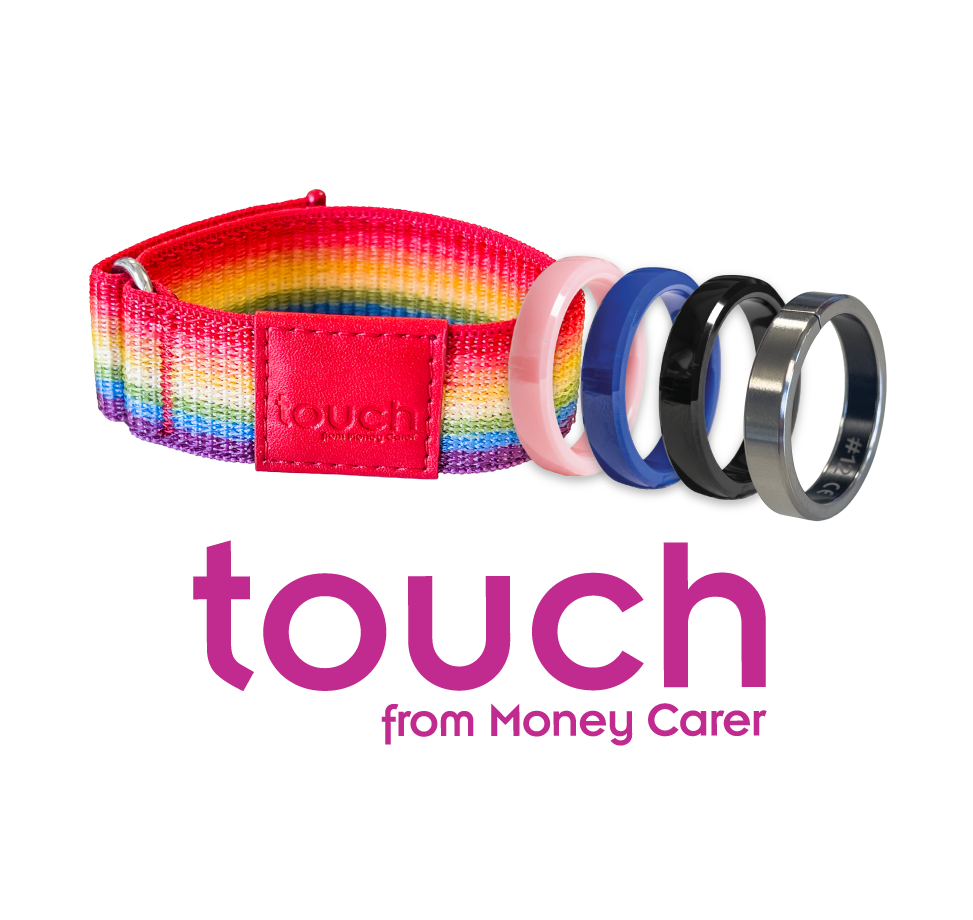
Touch from Money Carer is a range of payment wearables, including rings and bands, designed to make payments more accessible for everyone.
Touch enables secure, contactless payments with just a tap — no card required. By removing the need to remember PINs or carry multiple items, it simplifies everyday transactions and supports greater independence.
Why payment wearables matter
While digital payments are convenient for many, they can present challenges for others.
Research shows:
- 1 in 5 older adults report difficulties using chip-and-PIN machines
- Usability declines with age and disability
- Over 10 million adults in the UK are considered financially vulnerable
For individuals with cognitive impairments, physical disabilities or limited digital access, remembering PINs, using small keypads or navigating mobile apps can be difficult.
Payment wearables help remove these barriers.
Supporting independence and accessibility
Payment wearables are particularly valuable for individuals who:
- Struggle with memory or PIN recall
- Have limited dexterity or mobility
- Do not use smartphones
- Require simple, consistent payment methods
By enabling payments through a simple tap, wearables reduce reliance on others and allow users to manage their own spending more confidently.
This can have a meaningful impact on independence, dignity and day-to-day wellbeing.
Security and peace of mind
Security is a key consideration in any payment method, and wearables are designed with this in mind.
Payment wearables:
- Use tokenised technology, meaning no sensitive card details are stored or shared
- Can be quickly paused or deactivated if lost
- Reduce the need to share PINs with others
For vulnerable individuals, this is particularly important. In many cases, sharing a PIN with carers or family members can increase the risk of financial abuse. Wearables help remove this need altogether.
A practical solution for everyday life
From buying groceries to paying for transport or a coffee, payment wearables are designed to fit seamlessly into everyday life.
They are:
- Simple – no need to remember PINs or carry a wallet
- Durable – designed to be worn daily
- Discreet – no visible card details
- Reliable – always available when needed
Whether used independently or alongside existing support, they offer a flexible and user-friendly way to pay.
Financial inclusion in action
As payment technology continues to evolve, it is essential that no one is left behind.
Payment wearables represent a step towards more inclusive financial services — ensuring that people of all abilities can participate in everyday transactions safely and confidently.
By focusing on accessibility, simplicity and security, solutions like Touch from Money Carer help bridge the gap between innovation and real-world needs.
Final thoughts
Payment wearables are more than just a convenience — they are a practical tool for improving access, reducing risk and supporting independence.
As the UK continues to move away from cash, solutions that are designed for everyone — not just the digitally confident — will play an increasingly important role.